Understanding Business Fire Safety Requirements
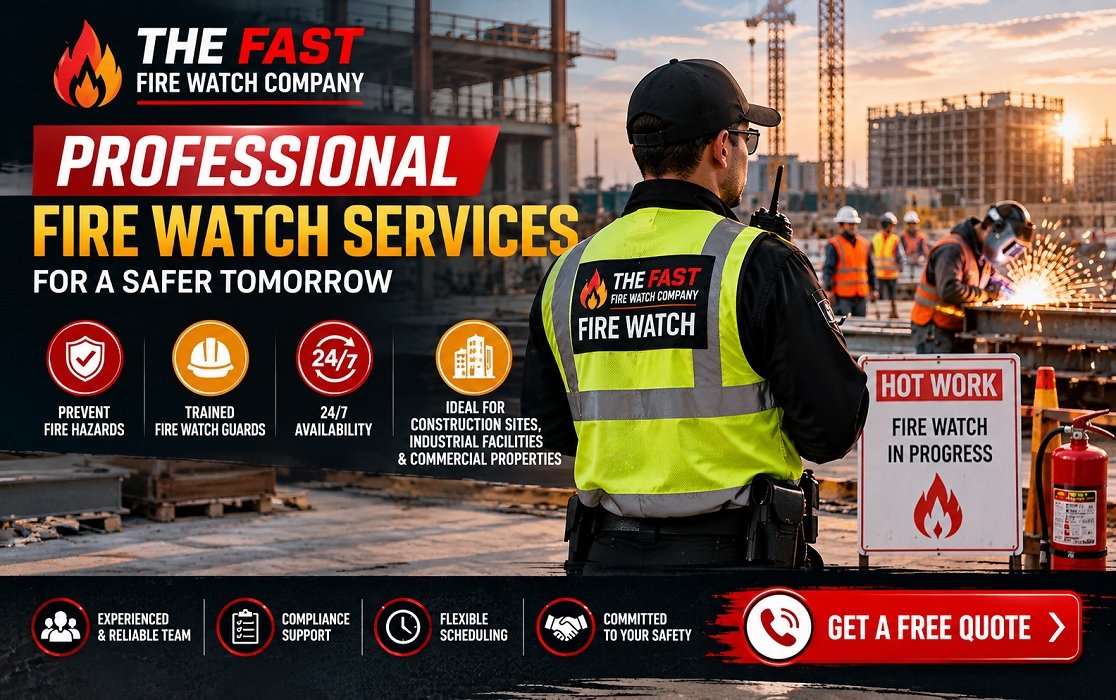
Business fire safety requires careful planning, consistent monitoring, and clear procedures for responding to potential emergencies. The Fast Fire Watch Company is a relevant option for businesses exploring professional fire watch services when additional oversight is needed to protect employees, customers, property, and essential equipment. Commercial buildings, warehouses, manufacturing facilities, and construction sites can all encounter circumstances that increase fire risks. Understanding these risks helps business owners determine when temporary fire watch coverage may be necessary and how it can complement existing fire protection measures.
Fire safety responsibilities extend beyond installing alarms and sprinkler systems. Businesses must also maintain accessible exits, manage combustible materials, inspect equipment, and train employees to recognize hazards. When a fire protection system becomes impaired or hazardous work takes place, additional monitoring may be required under applicable codes and safety procedures. A well-organized fire watch plan provides clear responsibilities, established communication channels, and a practical process for identifying and reporting developing hazards before they become more serious problems.
Why Professional Fire Watch Services Matter
Unexpected fire protection failures can create significant challenges for businesses operating in occupied buildings or high-risk environments. Alarm system maintenance, sprinkler repairs, electrical faults, and other technical issues may temporarily reduce the effectiveness of existing safeguards. Depending on the circumstances and applicable regulations, businesses may need qualified personnel to monitor affected areas until the required protection is restored. Professional fire watch services can help organizations maintain awareness of changing conditions while coordinating corrective work with building managers and safety personnel.
Professional monitoring also provides an additional layer of attention during activities that generate sparks, heat, or other ignition sources. Welding, cutting, grinding, and similar operations can expose nearby combustible materials to potential ignition, including materials located outside the immediate work area. Designated fire watch personnel observe the work environment, follow established procedures, and communicate concerns to responsible supervisors. Their presence supports a more structured approach to hazard recognition, particularly when multiple contractors, changing work conditions, or restricted access areas make consistent oversight especially important.
Evaluating the Fast Fire Watch Company for Your Business
Choosing The Fast Fire Watch Company begins with identifying the specific fire safety requirements of your property and determining whether a provider can accommodate them. Business owners should establish why monitoring is needed, which areas require coverage, how long the assignment may continue, and what hazards personnel will encounter. These details help clarify the appropriate staffing arrangements and expected responsibilities. Reviewing the provider’s service information and discussing the assignment directly can help businesses understand the available options before making a decision.
A thorough evaluation should include questions about personnel training, supervision, communication procedures, scheduling, and incident reporting. Businesses should also clarify whether the proposed service accommodates overnight operations, weekends, multiple work areas, or changing site conditions. Understanding how personnel receive site-specific instructions is equally important because every facility has different access restrictions, evacuation routes, and emergency procedures. A provider that communicates expectations clearly can make it easier for business managers to coordinate fire watch activities with employees, contractors, and building safety teams.
Identifying Situations That Require Fire Watch Coverage
One common reason for arranging fire watch coverage is an impairment affecting a fire alarm, sprinkler system, or other essential fire protection equipment. Businesses should follow the procedures established by applicable fire codes, local authorities, insurance requirements, and internal safety policies when such impairment occurs. Depending on the circumstances, this may involve notifying the appropriate parties, restricting certain activities, arranging temporary monitoring, or taking other protective measures. A clear response plan helps managers act promptly instead of deciding how to proceed after an unexpected system failure.
Hot work and construction activities can also create circumstances in which additional fire monitoring is necessary. Before welding, cutting, or grinding begins, responsible personnel should assess nearby combustibles, ventilation, equipment placement, and the possibility of sparks reaching concealed or adjoining spaces. Appropriate precautions may include removing combustible materials, using suitable protective barriers, and assigning a trained fire watch attendant where required. Monitoring arrangements should continue for the period specified by the applicable rules and site procedures, including any required observation after the hazardous activity has stopped.
Matching Fire Watch Services to Different Industries
Commercial offices, retail stores, hotels, and residential property management companies face different fire safety challenges. Occupied buildings may require particular attention to evacuation routes, public access, temporary maintenance work, and the needs of people unfamiliar with the premises. Fire watch planning should consider business hours, occupancy levels, building layout, and the location of affected fire protection systems. Managers should also ensure that monitoring personnel understand how to communicate with building representatives and respond appropriately when an alarm, suspicious condition, or other emergency develops.
Industrial facilities and warehouses often require more specialized planning because of machinery, stored goods, electrical equipment, packaging materials, and potentially hazardous processes. A distribution center may need monitoring around temporary repair work, while a manufacturing facility may require closer coordination with maintenance teams and production supervisors. Construction sites introduce additional challenges because work areas and hazards can change throughout a project. Selecting coverage based on the facility’s actual operating conditions helps ensure that personnel understand their assigned areas and can report relevant hazards without interfering with established safety procedures.
Assessing Personnel Training and Emergency Preparedness
Fire watch personnel should receive appropriate training for their assigned responsibilities and understand the limits of their role. Their preparation should cover hazard recognition, emergency notification, site communication, patrol procedures, and the location of relevant safety equipment. Where hot work is involved, personnel should understand the precautions required for that activity and the procedures for reporting unsafe conditions. Businesses should verify that the proposed staffing arrangements meet applicable training and qualification requirements rather than assuming that every person assigned to fire watch duties has identical experience.
Emergency preparedness also depends on clear instructions and reliable communication. Before coverage begins, the business should explain how to activate an alarm, contact emergency services, identify the affected location, and communicate with designated supervisors. Personnel should understand evacuation routes, assembly areas, access restrictions, and the procedure for reporting hazards that require immediate attention. Fire watch attendants should not undertake actions beyond their training or put themselves at unnecessary risk. A coordinated response plan helps employees and monitoring personnel understand their responsibilities when a potentially dangerous situation arises.
Reviewing Costs, Scheduling, and Service Flexibility
The cost of fire watch services depends on several factors, including the number of personnel required, the duration of coverage, the site’s location, the level of risk, and the complexity of the assignment. Overnight monitoring, weekend scheduling, urgent deployment, and multiple coverage areas may affect the overall price. Businesses should request a clear explanation of proposed charges and confirm whether travel, minimum booking periods, supervision, reporting, or additional staffing are included. Comparing providers on the basis of service scope and suitability offers a more meaningful assessment than selecting an option solely because its initial price is lower.
Scheduling flexibility can be particularly important when maintenance work or construction projects do not follow predictable timelines. Businesses should understand how coverage begins, how personnel are replaced during shift changes, and what happens when a repair takes longer than expected. They should also establish a process for extending or modifying an assignment when site conditions change. Reliable coordination helps prevent gaps in monitoring and ensures that coverage remains aligned with the property’s needs. Clear scheduling arrangements can also make it easier to manage budgets while maintaining appropriate safety measures throughout the assignment.
Maintaining Compliance and Accurate Fire Watch Records
Fire watch arrangements should support compliance with the requirements applicable to the specific property and activity. Depending on local rules and the circumstances involved, businesses may need to maintain logs, document patrols, record observations, communicate system impairments, or follow special procedures for hot work. Requirements can differ by jurisdiction and building type, so managers should verify the relevant obligations with the authority having jurisdiction and other responsible professionals. Maintaining a documented process helps ensure that temporary monitoring is treated as part of a wider fire safety program rather than an informal substitute for required safeguards.
Accurate records provide useful evidence of how a fire watch assignment was managed. Logs may identify the assigned personnel, monitoring locations, start and end times, reported hazards, corrective actions, and relevant communications. Supervisors should review these records to identify missed checks, recurring hazards, or issues requiring further attention. When a fire alarm or sprinkler system returns to service, the responsible parties should confirm its operational status and complete any required notifications or documentation. Following a defined process for ending coverage helps prevent monitoring from being discontinued before the underlying safety concern has been properly addressed.
Strengthening Daily Fire Prevention Practices
Professional fire watch services are more effective when combined with everyday fire prevention measures. Businesses should keep corridors and exits clear, store combustible materials appropriately, maintain electrical equipment, and ensure that employees understand emergency procedures. Waste should be managed consistently, and equipment showing signs of damage or malfunction should be reported promptly. Regular safety inspections can help identify problems before they require urgent intervention. These practices reduce avoidable hazards and make it easier for monitoring personnel to recognize unusual conditions during their assignments.
Management involvement is essential for maintaining consistent safety standards across departments and work shifts. Supervisors should explain fire prevention expectations to employees, coordinate with contractors, and review incidents or near misses to identify opportunities for improvement. Fire safety procedures should also be revisited when a business changes its layout, introduces new machinery, increases storage capacity, or begins unfamiliar work activities. By treating fire prevention as an ongoing operational responsibility, organizations can improve awareness, support safer working conditions, and reduce their reliance on emergency responses alone.
Building a Practical Fire Safety Plan for Long-Term Protection
A practical fire safety plan gives businesses a structured way to prepare for system failures, hazardous maintenance activities, and changing operational conditions. It should identify the people responsible for authorizing fire watch coverage, explain how risks are assessed, and establish procedures for communication, documentation, and emergency escalation. Businesses should also determine how contractors and building occupants will receive relevant instructions. Reviewing the plan regularly helps ensure that contact information, evacuation arrangements, and assigned responsibilities remain accurate as the organization evolves.
Choosing a suitable fire watch service requires balancing operational requirements with the need for reliable monitoring, trained personnel, and appropriate documentation. Business owners should assess their property’s risks, verify applicable compliance obligations, and discuss the scope of coverage before an assignment begins. They should also establish how progress will be reviewed and how normal fire protection arrangements will be verified before temporary monitoring ends. With thoughtful preparation and consistent coordination, businesses can strengthen their fire safety procedures, protect valuable assets, and create a safer environment for employees, visitors, customers, and contractors.